
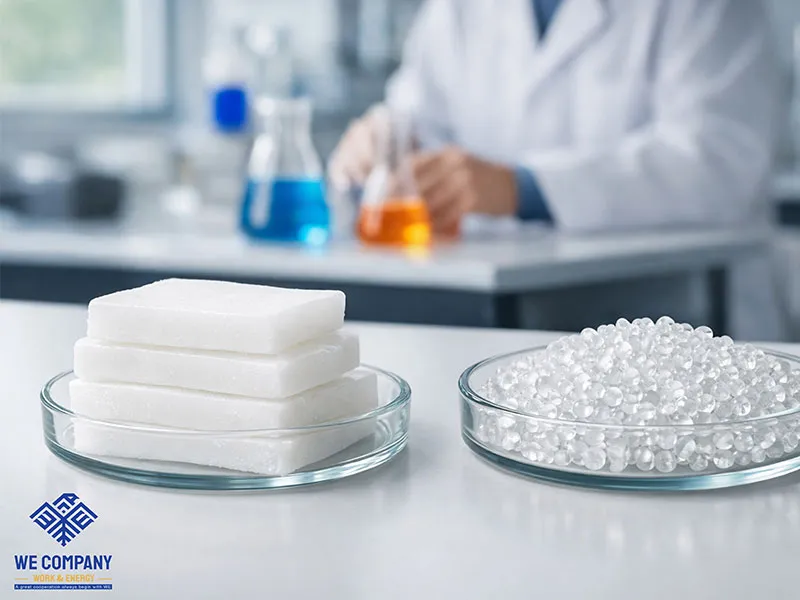
The Difference Between Paraffin and Synthetic Wax in Formulations
Introduction: Choosing the Right Wax Isn’t Just Chemistry—It’s a Strategic Move
In industries where material performance, appearance, and cost-efficiency matter—such as rubber, plastics, packaging, cosmetics, and candle manufacturing—the choice of wax in formulations can drastically affect the end product.
Yet many technical buyers and consultants are left asking:
“What’s the practical difference between paraffin and synthetic wax—and which one is better for my application?”
In this article, we break down the science, sourcing, and strategic considerations to help you make an informed choice. If you’re advising clients or managing procurement, understanding these differences could impact your project’s technical consistency, ROI, and customer satisfaction.
Paraffin Wax: The Tried-and-True Hydrocarbon Standard
Paraffin wax is a petroleum-derived wax composed of saturated hydrocarbons. It’s widely used due to its availability, cost-effectiveness, and performance across a range of industrial applications.
Key Characteristics:
- Derived from petroleum distillation
- Available in fully refined, semi-refined, and slack wax forms
- Typically melts between 46–68°C
- Oil content ranges from 0.5% to 5%
- Chemically inert and stable
- Common packaging: cartons, PP bags, jumbo bags
Applications:
- Candle manufacturing
- Rubber compounding
- Packaging (e.g. coated paper)
- Electrical insulation
- Cosmetics (in non-sensitive formulations)
Advantages:
- Cost-efficient
- Readily available
- Predictable melting behavior
- Easy to blend with additives
Synthetic Wax: Engineered for Precision Performance
Synthetic wax refers to man-made waxes produced from chemical synthesis processes like Fischer-Tropsch or polyethylene polymerization. These waxes offer high purity, narrow carbon chain distribution, and tailored properties.
Key Characteristics:
- Produced via gas-to-liquid or polymerization methods
- Lower molecular weight with uniform chain length
- Melting point highly customizable (e.g., 50–120°C)
- Extremely low oil content (0.01–0.1%)
- Greater oxidative stability
Applications:
- High-performance rubber and tire formulations
- Hot-melt adhesives
- PVC processing
- Premium cosmetics
- Pharmaceuticals
Advantages:
- Higher thermal and oxidative stability
- Better lubrication at lower dosage
- No odor or impurities
- Consistent behavior across batches
Paraffin Wax vs Synthetic Wax: Comparison Table
| Feature | Paraffin Wax | Synthetic Wax |
|---|---|---|
| Source | Petroleum distillation | Chemical synthesis |
| Oil Content | 0.5% – 5% | < 0.1% |
| Purity | Moderate | High |
| Melting Range | 46–68°C | Customizable (50–120°C) |
| Stability | Good | Excellent |
| Cost | Low | Higher |
| Best For | General use, cost-sensitive applications | High-performance or sensitive formulations |
When to Choose Paraffin Wax Over Synthetic Wax (and Vice Versa)
Choose Paraffin Wax if:
- Your formulation allows some oil residue
- Cost control is critical
- You are producing non-premium-grade candles, rubber parts, or wax coatings
Choose Synthetic Wax if:
- Your product requires precision, purity, or thermal stability
- You’re formulating for medical, food-contact, or cosmetic applications
- You need tight batch-to-batch consistency
Related Reading:
Why Work and Energy Co. for Paraffin Wax?
At WE Co., we’ve supplied high-quality paraffin wax to more than 15 countries with:
- Fully customizable packaging (carton box, drum, jumbo bag)
- SGS-inspected quality assurance
- Consistent product specifications across shipments
Whether you’re a rubber compounder in Turkey or a cosmetic formulator in the UAE, we’ll ensure you receive paraffin wax that meets your technical and commercial expectations.
👉 Explore Paraffin Wax Grades at WE Co.
Call to Action: Get Technical Data or Request a Sample
Need a COA or technical consultation on your wax application?
Our advisors are ready to assist with formulation recommendations or detailed specs.
📩 Contact us today for a sample or custom quotation.
Let’s Talk Technical →
Summary
Whether you’re formulating a cost-sensitive blend or a high-purity product, the choice between paraffin and synthetic wax depends on:
- Technical requirements (purity, performance)
- Budget constraints
- End-use industry compliance
Make your formulation more competitive, compliant, and consistent—starting with the right wax.
FAQ – Paraffin vs Synthetic Wax
1. Is synthetic wax always better than paraffin wax?
Not necessarily. Paraffin is still preferred in many cost-sensitive applications. Synthetic wax is ideal when performance and purity are critical.
2. Can paraffin wax be used in food or pharmaceutical applications?
Only highly refined grades may be acceptable, but synthetic waxes are generally safer due to their purity.
3. What’s the oil content difference between paraffin and synthetic wax?
Paraffin can have 0.5–5% oil, while synthetic wax typically contains less than 0.1%, ensuring better thermal behavior and oxidative resistance.
Contact Information
📍 Work and Energy Co. (WE Co.)
📧 info@workandenergy.com
🌐 www.workandenergy.com
📍 UAE , Dubai| Exporting globally
No comment